
Commercial Tenant Build Out Phoenix Cost: Estimates, Timeline & Permits
Planning a tenant improvement can feel overwhelming, especially when you are juggling budgets, landlord expectations, and local permit rules. Costs vary widely in Phoenix depending on tenant use, finishes, and how much of the MEP systems you must update.
Knowing the commercial tenant build out phoenix cost up front helps you set realistic budgets, negotiate tenant improvement allowances, and avoid change orders that blow up your schedule. Below is a practical, contractor-level guide that explains typical price ranges, what drives costs, timeline expectations, and how to work with a licensed local general contractor to get the job done right.
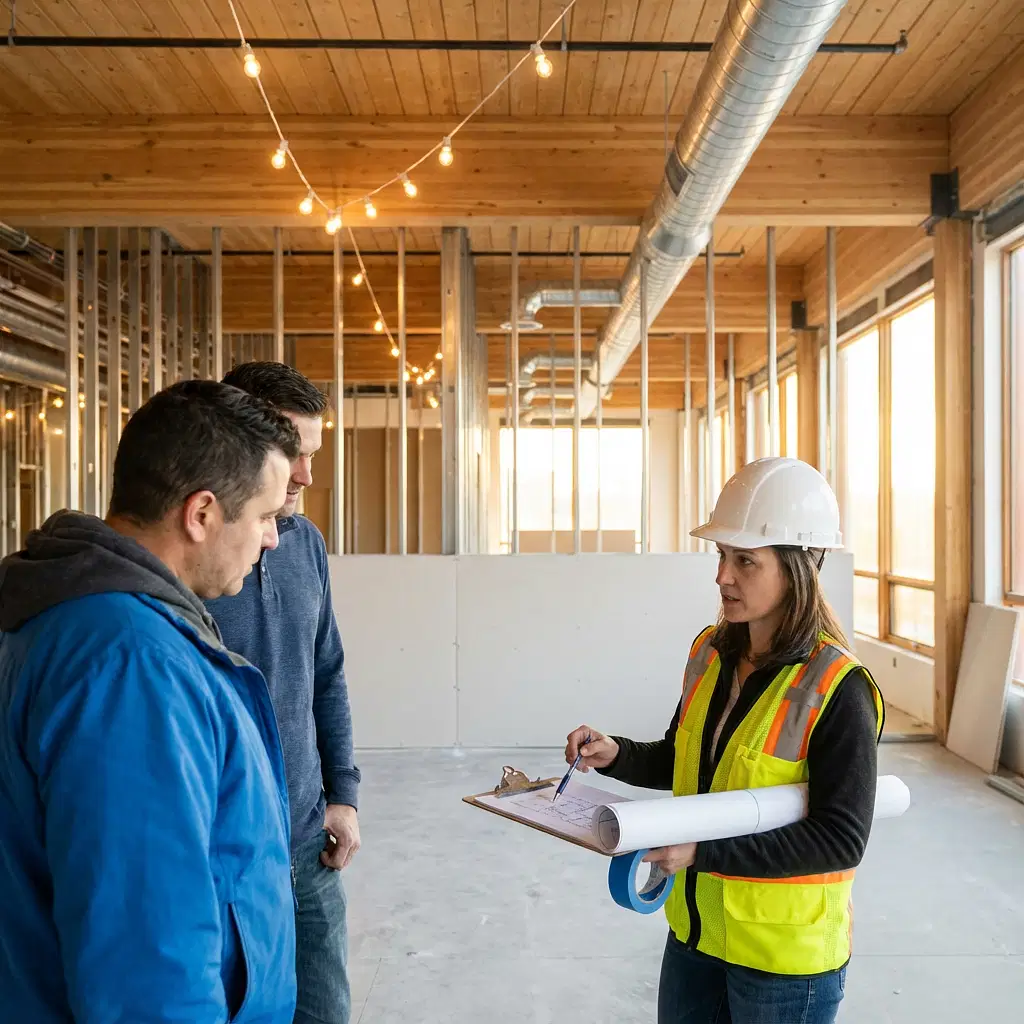
Typical cost ranges for Phoenix tenant build outs
Costs depend on the type of tenant, finish level, and whether major mechanical, electrical, or plumbing work is needed. Use these high-level ranges to start budgeting, then get quotes for accurate pricing.
Rough per-square-foot estimates
- Basic office, light retail: $40 to $80 per sq ft, generally for cosmetic finishes, minimal HVAC changes, and new flooring or paint.
- Mid-range professional office or retail: $80 to $150 per sq ft, includes upgraded finishes, new lighting, partitioning, and some MEP work.
- High-end retail, restaurants, medical, or specialized uses: $150 to $350+ per sq ft, includes commercial kitchen equipment, medical gas or exhaust systems, specialized tenant improvements, or heavy structural modifications.
People Also Ask: How accurate are per-square-foot numbers?
These ranges are directional. The true cost comes from an itemized estimate. Factors like structural changes, localized permit fees, accessibility upgrades, and landlord requirements can push costs well above the averages.
What drives a tenant build out cost
Hard costs: construction and systems
Hard costs are the bulk of the budget. Expect to pay for demolition, framing, drywall, flooring, ceilings, doors, windows, HVAC modifications, electrical upgrades, plumbing fixtures, and finishes.
Soft costs: design, permits, and administrative fees
Soft costs include architectural or design fees, engineering, permit fees, plan review, utility hookups, insurance, and contractor bonds. In Phoenix, budget for plan review and permit fees that vary by city and project scope.
Contingency and change orders
Always include a contingency of 5 to 15 percent for unknowns discovered during demolition, code-mandated upgrades, or scope changes. Change orders are the most common budget busters, so detailed scopes help control surprises.
Cost examples by tenant type
Small office (1,000 to 3,000 sq ft)
- Typical cost: $50 to $120 per sq ft.
- Common drivers: new partitions, acoustic ceilings, upgraded IT and lighting, ADA restroom upgrades.
Retail store (1,000 to 5,000 sq ft)
- Typical cost: $60 to $200 per sq ft.
- Common drivers: storefront glazing, specialty flooring, display fixtures, signage coordination, and electrical distribution for POS systems.
Restaurant or food service
- Typical cost: $150 to $350+ per sq ft.
- Major drivers: commercial kitchen equipment, grease interceptors, hood systems, fire suppression, plumbing capacity, and higher ventilation demands.
Medical, dental, or lab space
- Typical cost: $150 to $300+ per sq ft.
- Major drivers: medical gas, specialized HVAC filtration, exam rooms, sterilization areas, and code compliance for health facilities.
Permits, inspections, and Phoenix specifics
Permits, plan checks, and inspections add time and cost. Local municipal rules in Phoenix and surrounding Valley cities can require: permit fees based on valuation, stamped plans from architects or engineers, and specific inspections for plumbing, electrical, mechanical, and fire systems. Your general contractor should pull permits and coordinate inspections to avoid costly pauses.
People Also Ask: Who pulls the permits for a tenant build out?
A licensed general contractor typically pulls permits, submits plans, and schedules inspections. That is part of professional project management, and it reduces risk for the tenant and landlord.
Tenant improvement allowance and landlord negotiation
Many commercial leases include a tenant improvement allowance, a negotiated dollar amount the landlord contributes toward build out. Allowances are often quoted as a dollar per square foot or a lump sum. Know the following when negotiating:
- Get the allowance in writing, including what it covers.
- Ask whether unused allowance can be applied elsewhere or returned in cash.
- Clarify whether landlord-approved vendors are required, and how overages are handled.
A detailed estimate from a trusted contractor arms you in negotiations and helps document the work scope the allowance will cover.
Timeline and scheduling impacts on cost
Typical timelines vary by scope: small offices can finish in 4 to 8 weeks, mid-size projects 8 to 16 weeks, and complicated restaurants or medical spaces 4 to 6 months or more. Rushed schedules often increase cost because of premium labor, expedited material delivery, and overtime. Plan realistic schedules with built-in float to control costs.
How to reduce build out costs without sacrificing quality
- Reuse existing infrastructure where possible, like HVAC trunks, electrical panels, and restrooms.
- Standardize finishes across multiple locations to get volume pricing.
- Stage the project and prioritize critical items first to maintain cash flow.
- Select durable finishes that lower long-term maintenance costs.
- Work with a contractor who provides transparent line-item estimates to compare bids effectively.
Why hire a full-service licensed general contractor in Phoenix
A full-service contractor provides hands-on project management, pulls permits, coordinates MEP trades, and delivers final inspections and punch lists. They reduce risk, manage schedule, and often have vetted subcontractors who understand local code requirements. For more details on the services we offer, see our Services page.
People Also Ask: How do I estimate my project budget?
Start with per-square-foot ranges for your tenant type, then get an itemized estimate covering demolition, construction, MEP, soft costs, permit fees, and a contingency. For negotiating landlord allowances, present a contractor's estimate to support your request.
How Best Remodeling & Construction helps you save time and money
We offer end-to-end tenant improvement services in Phoenix, from initial scopes and design collaboration to permits, construction, and final inspections. Our team focuses on transparent estimates, proactive change-order control, and hands-on site management to keep projects on budget and on schedule. Learn about our commercial capabilities on the Commercial Remodeling page, or explore our Residential Remodeling services for mixed-use projects.
People Also Ask: Do I need an architect for a tenant build out?
It depends on scope. Simple cosmetic changes may not need an architect, but structural changes, significant MEP rework, or code upgrades typically require stamped plans from an architect or engineer. We coordinate design professionals as needed.
Frequently Asked Questions
How much will my specific tenant build out cost in Phoenix?
Costs vary widely by tenant type, size, and finishes. Use per-square-foot ranges as a starting point, then request an itemized estimate from a licensed contractor for a precise budget.
What permits are required for tenant improvements?
Typical permits include building, mechanical, electrical, plumbing, and fire. Permitting requirements depend on the scope and the municipality. Your contractor should handle permit submittals and inspections.
How long does it take to complete a tenant build out?
Smaller offices may finish in 4 to 8 weeks, medium projects in 8 to 16 weeks, and complex restaurants or medical spaces can take 4 to 6 months. Permit turnaround and specialized inspections can affect timelines.
Can I use the landlord's contractor?
You can, but consider whether the landlord’s contractor aligns with your schedule, quality expectations, and ability to manage change orders. Independent bids help you compare options objectively.
What is a reasonable contingency for a build out?
Plan for a 5 to 15 percent contingency depending on project complexity. Higher contingencies are wise for older buildings where hidden conditions are likely.
How does a tenant improvement allowance work?
A tenant improvement allowance is negotiated into the lease. It covers some or all of the build out costs up to the agreed amount. Clarify whether the allowance covers soft costs and how overages are paid.
Who manages the inspections and final sign-offs?
The licensed general contractor typically coordinates inspections and obtains final approvals. That service is part of professional project management and reduces risk for the tenant.
Ready to get a detailed estimate and timeline?
If you are planning a commercial tenant build out in Phoenix, don’t guess on budgets. Contact our team for a site visit, detailed line-item estimate, and realistic schedule. View our full list of offerings on the Services page, or start a project conversation on our Contact page. Call us at (602) 206-5726 to schedule a free consultation.
Conclusion
Tenant improvements in Phoenix require realistic budgets, clear scopes, and a contractor who can navigate permits and inspections. Use per-square-foot ranges to set expectations, but always get an itemized bid and confirm landlord allowances in writing. With experienced project management and transparent pricing, you will control costs and keep your project moving.
About Best Remodeling & Construction
Best Remodeling & Construction is a licensed, bonded, and insured general contractor serving Phoenix and the surrounding Valley (AZ ROC#322168). We provide residential and commercial remodeling, tenant improvements, insurance claim reconstruction, and full home renovation services. Our focus is quality, communication, and customer satisfaction from the first consultation through final inspection.
Explore our services:
Call (602) 206-5726 to schedule a free consultation today.